


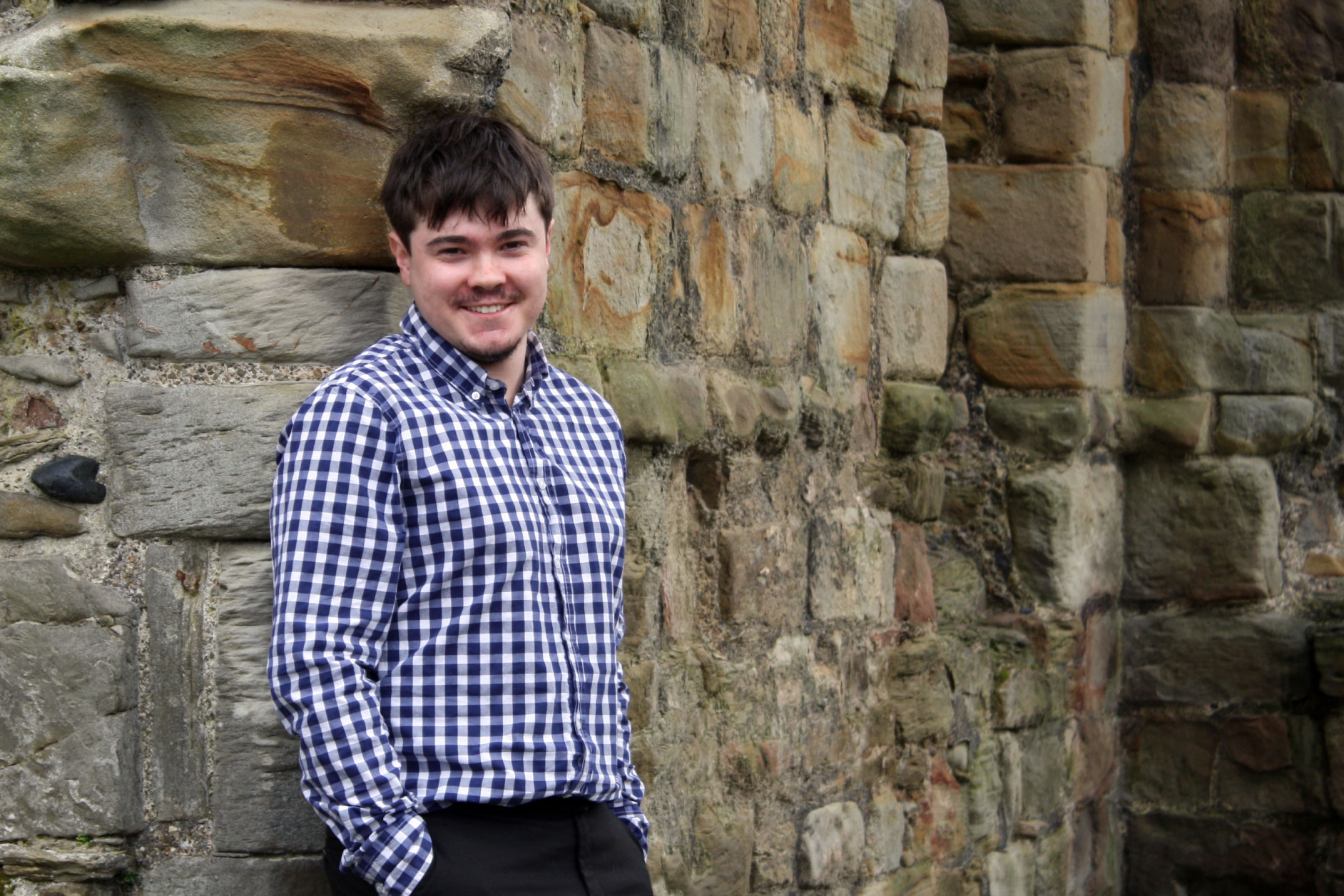
The myths of autism by Dr. Luke Beardon
Written on 12th Feb 2015 by Alex Lowery
Yesterday, I spoke at a Conference run by ‘Autism Networks’. I saw a talk by Dr Luke Beardon who is a well known expert on the subject of autism. He mainly spoke about the myths of ASC, and I thought he made some excellent points with his presentation. Some of his points hit the nail right on the head. There is an article he wrote for ‘Asperger United’ on this same subject. Dr Beardon has given me his permission to share it with you today. Dr Beardon; also has a blog of his own where he writes different posts about autism. You can view this here.

Introduction
This article is not (necessarily) fact. I do not claim to know all there is to know about autism; indeed, all I can claim is that I have a very keen interest in autistic people and have been working in “the field” for twenty years or so. I probably know a bit more than the “average man/woman on the street” but am more than happy to embrace the notion that in light of what there is yet to learn, I remain pretty ignorant. The main point of this article is to try and highlight all the so called “facts” that are peddled about autism which lead to ignorance and misunderstanding; my intention is to question the building blocks upon which many professionals have based their knowledge, to create fissures in the foundations, and to urge the professional sector, simply, to think again.
By writing “autism” I am including Asperger syndrome
I am writing about autism; I am categorically not writing about people who have both autism and learning disabilities.
If anything upsets you while reading this, please accept my apologies. All this is simply my opinion — open to question, absolutely. Nothing written here is intended to offend anyone.
Myth: autism is a mental illness and/or a disease.
Okay, now I am not suggesting that in modern times people are still suggesting that autism is a mental illness or a disease (please don’t tell me if they are, there’s only so much ignorance a person can take). But: if this is the case, why are sets of criteria to be found in the International Classification of Diseases and in the tome published by the American Psychiatric Association. Why do people often get referred to a psychiatrist for a diagnosis, why are children often referred to Child and Adolescent Mental Health Services (when there are no mental health issues evident)? I am not suggesting for one moment that there are not good psychiatrists or mental- health professionals out there, but what “qualifies” them to work with autistic folk? Surely, the erroneous connotations twixt autism and mental illness/disease are not safe, nor sensible.
Myth: Asperger syndrome is mild autism.
Excuse me for while I grind my teeth and bang my head against this convenient wall. Just don’t go there — ever. Just because someone is articulate, intelligent, amusing, fun to be with, interesting, loyal, fervently determined to right the wrongs of the world does not mean that they are “mild” anything. (In fact, that list could be the beginnings of the new set of diagnostic criteria for AS). People are either autistic or they are not. The severity (that is, the impact on the individual) will vary, dependent on numerous factors. So-called “severely autistic” individuals may be supremely happy; so-called “mildly autistic” individuals may be suicidal; you do the maths.
Myth: autism consists of a triad of impairments.
No, it doesn’t. There are clear differences between the development of the autistic child and the predominant neurotype (PNT). Difference does not equal impairment. A different way of developing does not automatically mean the individual is impaired. Even if one might argue that a certain “skill” is lacking, does that mean that the individual should be branded inferior? The PNT have the “skill” of chatting at length about essentially nothing: quite the coup, perhaps, but is it sensible? Many autistic people have the “skill” of chatting at length about subjects that are important to them: neither group is “right” or “wrong”, they simply possess different skills. Professionals must stop this branding of autistic people as impaired, deficient, or inferior, as it’s simply not true. Of course many people face problems; those problems are a combination of the individual plus the environment — not simply the autism. In this case, surely the sensible way forward is to change the environment, rather than somehow trying to change a person’s autism (which ain’t ever gonna happen).

Myth: autistic people are not sociable.
Where did this bizarre and incalculably inaccurate notion come from? Some people with autism will happily while away their lives with no interest in others, and this should be perfectly acceptable (note: if a person genuinely does not want to engage socially, don’t force them to; it can be tantamount to bullying). However,others might be hugely sociable, seeking company left, right, and centre. suspect the PNT population is pretty similar. Sociability has nothing to do with whether someone is autistic.
Myth: AS is an intelligent form of autism.
Yes, people with AS have average or above average intelligence. But, since when did autism denote intellectual impairment? If this was the case then surely the notion of “co-morbidity” with a learning disability would be defunct? (I am deliberately using “learning disability” here to denote intellectual impairment; as opposed to “learning difficulty”, such as dyslexia, which has nothing to do with intelligence). As far as I am aware, being autistic does not equate to being intellectually impaired, so the distinction between autism and AS can be questioned. Unfortunately, it appears that some diagnosticians make the assumption that the diagnosis of autism implies intellectual impairment; in isolation this is not accurate. If one (rightly, in my opinion) recognises that all autistic people are very much individuals, then such sub-classifications become highly questionable. What’s wrong with simply identifying the individual as autistic, and leaving it at that? As a brief aside, is there anything more ludicrous than the notion of “atypical autism”: if it wasn’t so tragic it would be laughable.
Some other myths that clearly speak for themselves. Autistic people:
Can’t look you in the eye
Can’t have a relationship
Won’t ever work
Don’t make excellent friends
Will never be independent
Are no good at sports
Can’t be good leaders
Never show their emotions
Are unfeeling and cold.
The above are so obviously insanely ridiculous I shall not waste any more words expanding on them.
There is nothing that an autistic person cannot achieve in life as a result of being autistic. All sorts of other things will come into play, of course, but autism alone is not a barrier to anything. Those professionals who turn into soothsayers for parents, and who predict doom and gloom at every turn should be ashamed. They are not fortune-tellers, and there is no way of knowing at childhood what the future holds. Yes, life is considerably tougher for most autistic people than their PNT peers, but it does not mean that dreams cannot be achieved. I’ve merely skimmed the surface of the sea of ignorance that is evident “out there”; by no means am I suggesting that all, or even most, clinicians and professionals are ignorant to a significant degree. However, I would stand by the sentiment that there is enough ignorance in enough clinicians and professionals for there to be a significant and negative impact on the lives of people with autism and their families. Clearly, this is unacceptable. Until it is accepted that the autistic population is not one to fear, to marginalise, to brand inferior, or to decry as impaired, it seems obvious that there is still work to be done. Such ignorance is neither an excuse, nor is it in any way, bliss.
Dr Luke Beardon has worked in the field of autism for approximately 20 years and has vast practical experience of working with people with Autism and Asperger syndrome. He currently lectures in Autism and Asperger syndrome at all academic levels as well as providing consultancy around the country. His Doctoral thesis was entitled ‘Asperger Syndrome and Perceived Offending Conduct: A Qualitative Study’ and he has a particular interest in individuals with autism who have broken the law.
Current Position: Senior Lecturer in Autism, The Autism Centre and Sheffield Hallam University
Summary of current role:
External Training
Development of training material
External consultant
Research
This is Alex Lowery back now. I hope you enjoyed this article as much as I did. My two favorite’s of his myth busters are the ‘Asperger’s Syndrome’ is mild autism and the ‘AS is an intelligent form of autism’. I really thought with these points in particular, he hit the nail right on the head.
Here are some articles on a similar subject.
Myth busting- does being autistic mean you lack empathy?
The Myth that everyone with autism is a savant.
10 things to know about NT’s (non autistic people).
Unless otherwise indicated, all materials on this page are © Alex Lowery Speaks About Autism. Please do not reproduce, modify or use for any purpose without the prior, written consent of the author. If you are interested in using an article on your blog or in your magazine, please contact us.






My son had second ASD assessment after been told inconclusive. Second assessments ASD tendencies. And he is now having CBT with no affect yet. Can i pay to see you?
I met u in Hull
You’ll have to contact him through twitter or something, assuming you mean Luke Beardon. This is only a guest article so he’s unlikely to read your comment.