



10 pointers to keep a child with autism safe from bullies online
Written on 3rd Dec 2013 by Sylvia Lowery
Bullying can affect any child or young person, but evidence suggests that individuals with autism are particularly vulnerable. Kevin Healy has started an online anti-bullying campaign, you can read about it here.
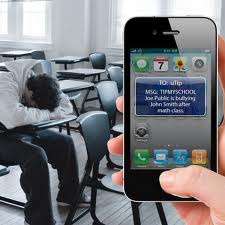
Always listen to someone when they tell you they are being bullied.
Here are some suggestions for keeping your child safe online.
1. Bullying online can often be an extension of traditional bullying . If you are a teacher or a parent don’t only focus on online bullying.
2. Explain how the internet works. A child with autism may well not be able to understand that a comment they make or a photo they post, or is posted by someone else, can be sent to a lot of people on the internet, or through a mobile phone.
Alex says. “I find it hard to imagine a situation that hasn’t happened to me yet. I also struggle to imagine what others are thinking or feeling. I once let someone have my YouTube account password because I couldn’t foresee the consequences. This person took over my account and did many things I still find painful to talk about. I felt anxious and depressed, my mum noticed something was wrong and made me tell her. She helped me get my account back and I felt a lot better.”
3. Understand that the need to find out what might happen can be compulsive for those who have autism. Alex says, “Sometimes I am just so curious to know what might happen that I do things even when I really know it’s a bad idea. I mainly learn from my mistakes. Yet I find it hard to apply this learning to a new situation. I think it’s good to give warnings of what has happened using real stories that have happened to others.”
4. Teach personal responsibility – explain that an angry response online will make it more likely that online bullying can grow and a lot of people may join in. Teach a young person with autism how to respond to a nasty comment. They should ignore the comment, report the comment, block the user, take a screen shot for evidence and inform a trusted adult.
5. Teach about the possibility of bullying before the young person has experienced it. Use examples of young people who have been bullied and talk through why was not their fault and what they could do if they find themselves in a similar situation. For a link to a good bullying course see here.
6. Sometimes a young person with autism may be causing upset to other young people which could lead to bullying. Alex says, “Not long ago I felt I had to make a point with my sisters, if we were having a debate about a certain fact. I felt like I wanted to prove I was right. They would try to stop me and I would feel really anxious. I was worried they would think I was stupid. Sometimes even if I said it once I felt like they didn’t get it and I would say it loads and loads and I wouldn’t want to let them go. Sometimes I hadn’t finished explaining I would just want to make one more point and I didn’t understand why they would get upset with me and tell me to stop.” Alex’s sisters felt that they were being trapped by Alex and felt very unhappy. Alex had to be taught that his behaviour was upsetting his sisters and that he had to find a way of coping with his anxiety that didn’t make them feel bad. Alex found it hard to understand that they were upset, yet he has found that as he controls this, his sisters are more willing to listen to him and he feels less anxious.
7. Become someone who understands the internet and all the different websites that can be accessed. Use internet safety controls check out the dangers. Understand that internet safety is your responsibilty.
8. A friend can provide the best protection from bullying – young people with autism may struggle to have friends. This makes a young person with autism particularly vulnerable. Some schools have set up lunch time clubs based around special interests for their students who have autism. This helps with the forming of friendships and can provide a place of refuge for the student with autism. When Alex was younger we used to arrange play dates with children his own age. We always tried to choose activities that were really fun and didn’t involve too much social interaction.
9. Don’t be afraid to go to the Police – if the bullying escalates to the point where someone is breaking the law it is important to involve the Police. An example of this might be physical or sexual assault, or the circulating of images of the child in a state of undress. Remember that a school can’t be held responsible for bullying that happens out of school hours, yet the school does have a responsibility to tackle bullying that happens on the school premises and a lot of online bullying is a continuation of traditional bullying that happens in the school.
10. Always believe a young person when they tell you something is happening. Don’t minimise it, take it seriously and give the help that is needed.
For more advice on preventing cyber bullying see here.
Unless otherwise indicated, all materials on this page are © Alex Lowery Speaks About Autism. Please do not reproduce, modify or use for any purpose without the prior, written consent of the author. If you are interested in using an article on your blog or in your magazine, please contact us.






What I good idea to have clubs in school and having a club the interest for the person with autism. that is a good why to make friends.